How protected are we from locust attacks?
Currently, there are more than 200 species of locusts. Examples include Moroccan, Asian, oasis, mountain, horse, desert, etc. In Samarkand region alone, 25,155 hectares of land where locusts have spread in 2021 had to be...
Currently, there are more than 200 species of locusts. Examples include Moroccan, Asian, oasis, mountain, horse, desert, etc. In Samarkand region alone, 25,155 hectares of land where locusts have spread in 2021 had to be treated with chemicals. This year, it is predicted that there is a risk of locusts spreading on 31,000 hectares in the region, and measures to combat this pest have been established. In particular, in our country, border troops, the Ministry of Emergency Situations, local khokimiyats, the Service for Combating Locusts and Mulberry Moths, and other officials are taking necessary measures to combat harmful locusts.
Locusts are omnivorous pests. Their larvae damage grain and other crops, while mature locusts eat leaves, young branches, and even flowers and buds. Locusts fly in swarms or singly. Those that fly in swarms first form swarms. Such swarms of larvae are constantly moving on sunny days. They do not move on cloudy and cold days. Locusts that form swarms pose a great danger, flying into oases and covering crops. In addition to cereals, they can damage many other crops, including corn, sorghum, alfalfa, vegetables, melons, cotton, etc.
Thanks to measures aimed at timely elimination of sources of pests, many crops of various crops, including cotton and cereals, are currently being saved from destruction. Despite this, some species of locusts can cause serious damage to agriculture. Chemical treatment alone is not enough to combat locusts. In this case, agrotechnical and land reclamation measures should also be carried out to create unfavorable conditions for locusts to breed, feed, and lay eggs.
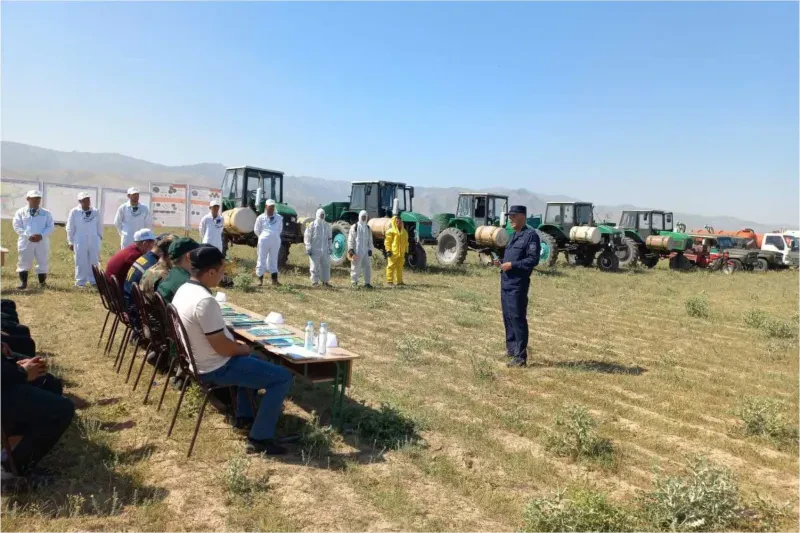
One of the next demonstration practical events entitled “Locusts are a dangerous pest of agricultural crops” was held in Nurabad district. The seminar was attended by employees of the district department of the regional Emergency Situations Department, the regional Department of Plant Quarantine and Protection, and officials of the district department, employees of the service for combating locusts and mulberry moths, and officials of the district medical association.
This practical seminar demonstrated the importance of knowing the bioecology of locusts in combating harmful locusts in mountainous and foothill areas, and provided participants with insights into agrotechnical and organizational management, the use of biological and chemical preparations in combating locusts, and provided demonstrations on first aid in case of poisoning during chemical treatment.
At the end of the seminar, it was determined that the relevant services should strengthen monitoring and control work in combating locusts, and timely create reserves of necessary chemicals and fuel and lubricants.
Currently, measures to combat harmful locusts are continuing in the regions.
Samarkand Regional Plant Quarantine and Protection Department
Information Service