What do you know about biolaboratories and plant clinics?
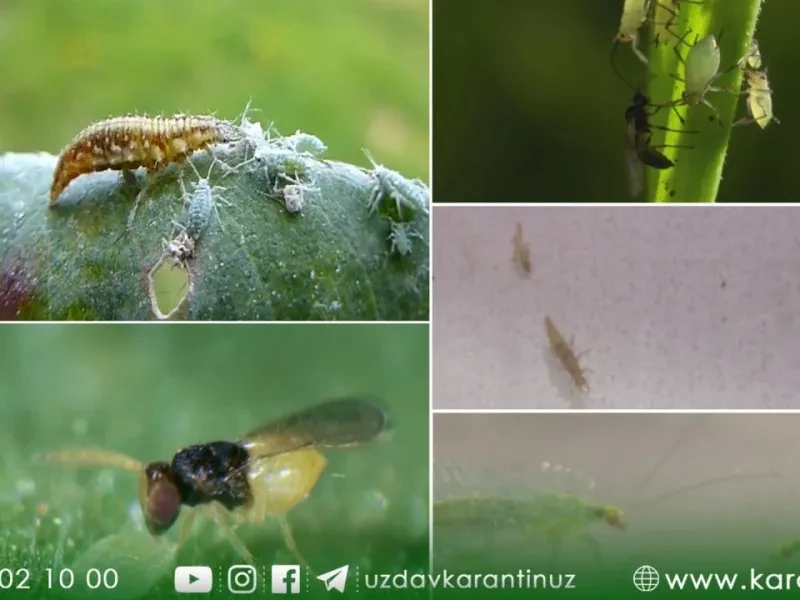
Biolaboratory - a biological laboratory is an institution that implements and controls the biological protection of crops from pests, diseases, and weeds in agriculture. Entomophages are bred in biolaboratories to combat...
Biolaboratory - a biological laboratory is an institution that implements and controls the biological protection of crops from pests, diseases, and weeds in agriculture. Entomophages are bred in biolaboratories to combat pests that interfere with the growth and development of agricultural crops and their abundant yield.
Entomophages are biological agents that protect plants from pests. Entomophages include trichogramma, goldfinch, poaching and other beneficial insects.
Trichogramma is widely used to combat more than 70 species of pests, including meadow, stem and corn moths, cabbage whiteflies and other harmful insects.
Trichogramma is used against insects that damage corn, soybeans, sunflowers, peas, cotton, potatoes and other types of agricultural crops.
Trichogramma lays eggs on freshly laid eggs of pests, thereby completely destroying harmful insects.
One female Trichogramma lays up to 80 eggs, the emergence of a new generation can last up to 14 days. Trichogramma is applied to grain fields and ditch banks from April at a rate of 1-1.5 grams per 1 hectare, depending on the degree of damage to plants, with an interval of 3 days.
Trichogramma insects destroy 215 species of pests. Trichogramma is used 1-2 times per season for maximum effect.
The technical efficiency of this entomophage preserves the crop up to 82%.
Brakon is a type of entomophage capable of protecting fields from more than 60 species of pests, including moths. Brakon is especially effective on cereals, vegetables, fruit trees and vineyards. It destroys about 60 types of pests that affect grain, cotton, vegetable and melon crops, as well as fruit crops.
The wasp is an insect that parasitizes the larvae of most pests.
Before the wasp places its embryos in the larvae of the pests, it paralyzes the host larva, and after the eggs are laid, the pest larva dies.
The wasp larvae hatch during the day. Most often, the wasp chooses the larvae of the bollworm and corn moth, which cause great damage to crops, for laying eggs.
The development of the wasp generation lasts up to 18 days. Each pest larva can lay up to 10 eggs. According to some reports, it is enough to place 1.5 thousand wasps per 1 ha of land to completely destroy pests in the area. Starting from June, July, August, poaching against mealybugs is carried out with an interval of 10 days.
The technical efficiency of this entomophage preserves more than 72% of the crop.
Goldfinch is one of the most effective entomophages used in agriculture today. During the year, it produces five generations of larvae that feed on 76 types of pests and 11 types of tick eggs.
Therefore, the introduction of this entomophage is effective for most crops and can be carried out at all stages of the growing season.
Each larva is capable of destroying up to 400 aphids, more than 2 thousand spider mites, and about 300 eggs of the Colorado potato beetle. The larvae live up to 14 days. Females begin to give birth to a new generation 5-10 days after birth, and egg laying lasts 1-2 months. Up to one and a half thousand goldfish are released into 1 ha of cultivated land every 3 days.
The technical efficiency of this entomophage maintains productivity up to 97%.
In order to fully protect plants and achieve maximum crop safety up to 90%, it is necessary to introduce the right type of entomophages, selected depending on the growth stage of plants, as well as the type and development of plants, depending on the pest population. When preparing for the season, it is important to draw up a plan for treating the field with entomophages in biolaboratories in order to increase the necessary population of entomophages by the time of field cultivation.